I ran a six-stool smoothie stand called Pulp Cove, and before that I blended two smoothies a day through eight years of ER shifts, so smoothie blenders and juicers stopped being gadgets for me a long time ago. They became the machines that decide whether a morning works. One lesson came out of all of it: a blender's only real job is to turn frozen fruit and ice into something velvety with no chunks, and almost every disappointment traces back to dulled blades, a pitcher too big for one person, or a motor that needs 90 seconds where 30 would do. The four machines below cover the four jobs a home kitchen actually has.
The short answer: the Oster Pro 1200 is the pick for most kitchens, because 1,200 watts, seven speeds, a glass jar, and a 24 ounce to-go cup cover frozen fruit, ice, and grab-and-go shakes in one machine. The Ganiza is the budget entry if you want a jar blender and nothing else. The cold press juicer is a different animal, and the right one when greens are the point. The KitchenAid hand blender is what you reach for when a full pitcher is overkill.
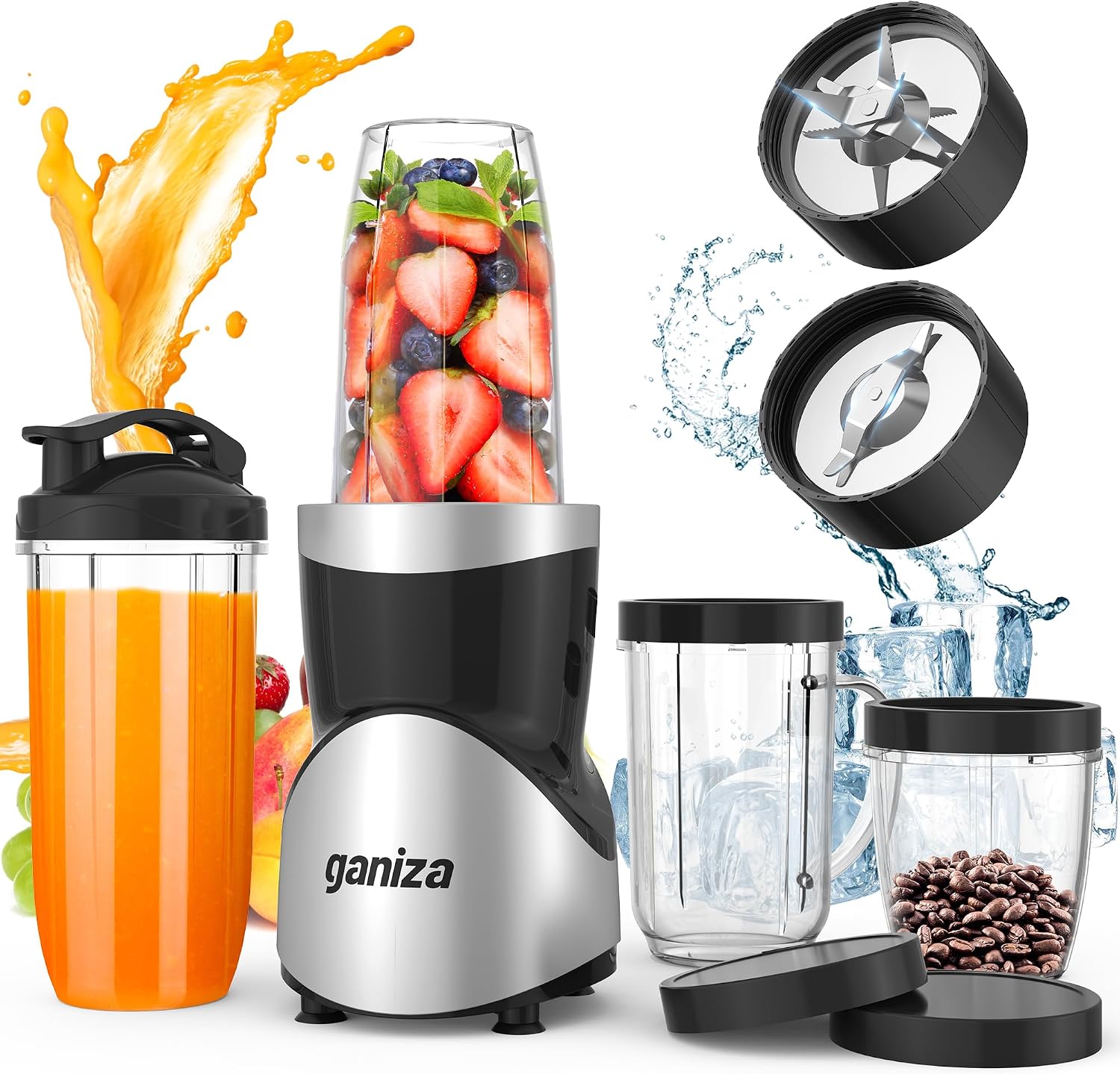
Ganiza Smoothie Blender, 900W
Lowest-cost way into a real blender jar, and 900 watts is enough motor for frozen fruit if you load the jar correctly
Least power in this group, so heavy loads take longer, and longer blending means more aeration
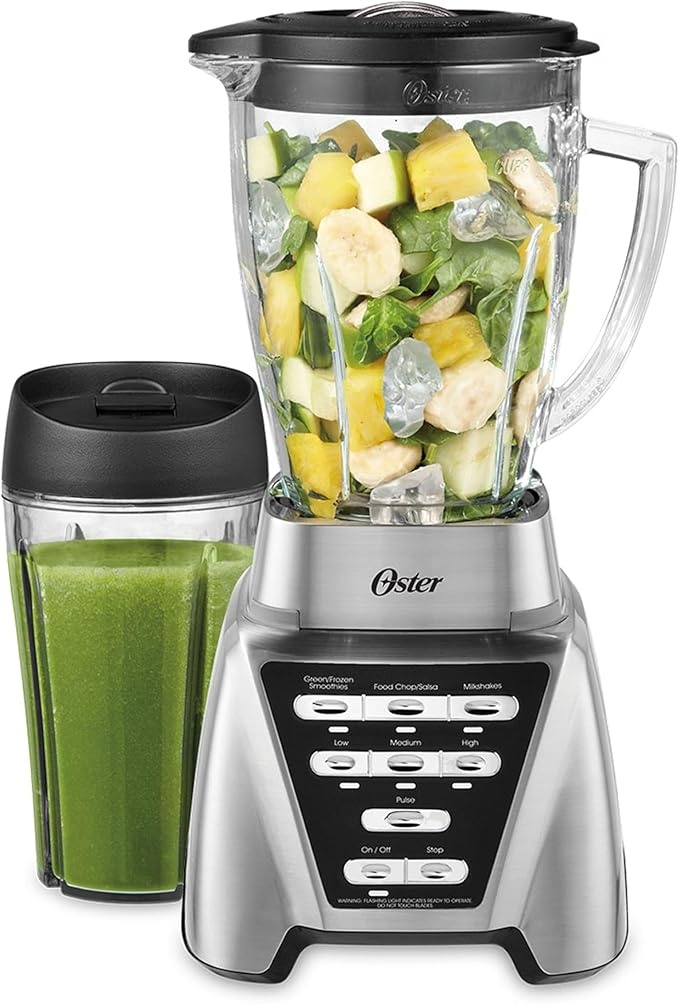
Oster Pro 1200 Smoothie Blender with Glass Jar & 24oz To-Go Cup
1,200 watts, seven speeds, a glass jar that will not scratch or hold onto yesterday's garlic, plus a to-go cup for one-person mornings
Glass is heavier than plastic, and the brushed nickel finish shows every fingerprint
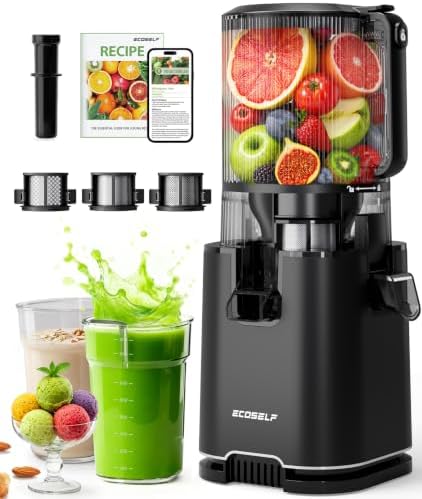
Cold Press Juicer Machines
Squeezes noticeably more out of greens than a centrifugal juicer, runs quieter, and leaves drier pulp
Slower feed, more parts to wash, and it will not crush ice or make a smoothie
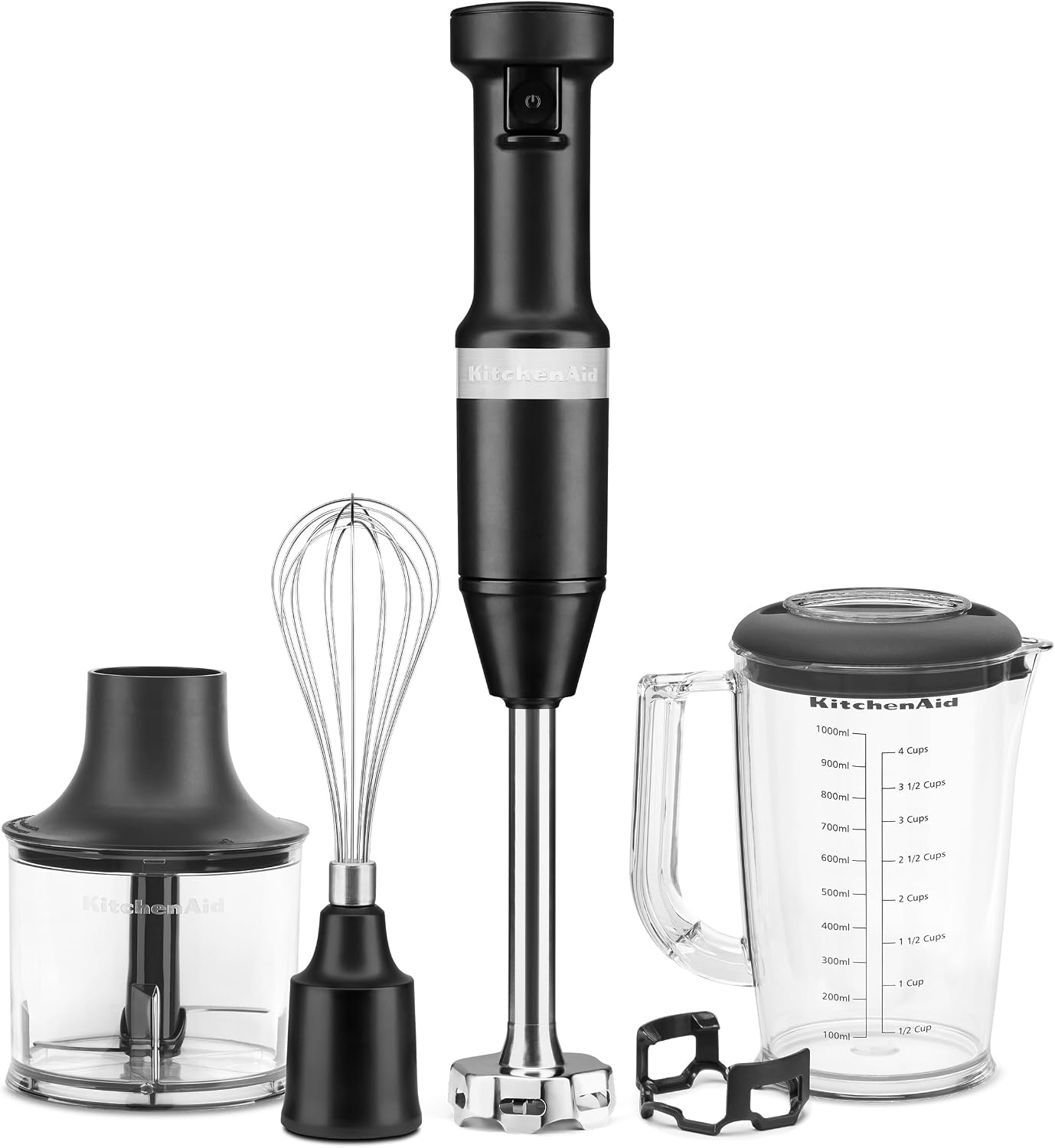
KitchenAid Variable Speed Corded Hand Blender with Attachments
Variable speed control keeps the splash down, it blends soup in the pot, and it stores in a drawer
It needs a vessel, it works in batches, and it is not the tool for a full pitcher of frozen fruit
Prices and availability were captured from Amazon Creators API and may change.
How I judge a blender or juicer
Every machine gets the same five checks, and none of them are about marketing copy.
First, the frozen fruit and ice test. Frozen mango, a handful of ice, a splash of liquid, 30 seconds. If I can feel chunks, it fails. This is the single test that matters most, because it is the one you will repeat every morning for years.
Second, the 25-blend mark. Blades dull. Every blade dulls. What separates a machine is whether the smoothies start coming out chewy at blend 26 or at year three. That is where "grainies" show up, and it is the number that actually decides what a machine is worth to you.
Third, noise at full power. I measure it. "Apartment friendly" means nothing printed on a box, and I have had a neighbor knock on my door to ask what the jet engine was.
Fourth, a full-batch run. If the lid pops the moment you fill the pitcher, the machine is out. Overloading a 72 ounce pitcher and painting the kitchen is a lesson you only need once.
Fifth, disassembly. Every part, including the base, has to come apart for real cleaning, and I check dishwasher claims myself rather than trusting the icon on the box.
Those five checks are why the sections below are organized the way they are: by job, not by wattage.
Full-size blenders: the Oster Pro 1200 and the Ganiza
The Oster Pro 1200 is the most complete machine in this group on paper, and the details are the reason. The glass jar is the part I care about most. Plastic pitchers scratch, hold color from turmeric, and eventually cloud over. Glass does not. It is heavier to lift and heavier in the dishwasher, and that is a fair trade for a jar that still looks clean in year five.
Seven speeds plus a 1,200 watt motor is more control than most people use, but the low end is genuinely useful: starting slow keeps frozen fruit from climbing the walls before the blades catch it, and pulsing on a low setting is how you avoid turning a thick smoothie into foam. The 24 ounce to-go cup is the sleeper feature. For a single person, blending in the cup you carry out the door removes a whole step and a whole second container from the sink. Visit on Amazon →
The Ganiza is the value play, and 900 watts is not a small number. It is simply the lowest here. Wattage is not the whole story, because jar geometry and blade design matter just as much, but a lower-powered motor usually means more seconds in the jar, and more seconds in the jar means more aeration. That is the foam layer on top of a protein shake, and it is why a shake can come out half air. If your routine is one smoothie a day with frozen berries and a banana, 900 watts is plenty. If you are blending a full jar of ice for a crowd, you will feel the difference. Visit on Amazon →
The honest trade-off between them: the Oster gives you the glass jar, the higher motor rating, and the to-go cup. The Ganiza gives you a lower entry cost and a smaller commitment. Neither one is the answer if you want to juice greens, which is the next section.
Cold press juicing: slow, quiet, and worth it for greens
The Cold Press Juicer Machines entry is the one machine here that is not trying to crush ice. It is squeezing produce, slowly, at low speed, and that difference is the whole point.
Cold press juicing extracts noticeably more liquid from leafy greens than a centrifugal juicer does, and the pulp comes out drier, which is how you know you got your money's worth from the produce. It also runs quieter than a spinning centrifugal machine, which matters in an apartment at 6 a.m. The cost is time. You feed it more slowly, you deal with more parts at the sink, and you cannot throw frozen fruit in it and call it breakfast. Visit on Amazon →
My rule for juicers has not changed: if you juice daily, cold press wins. If you squeeze one glass of orange juice at breakfast, a simple reamer beats a big electric machine, because countertop real estate is real estate and a juicer you have to assemble is a juicer you stop using. Cold press is the right call for kale, celery, and ginger. It is overkill for an orange.
Hand blenders: the KitchenAid KHBV83 and the case for less machine
The KitchenAid Variable Speed Corded Hand Blender with Attachments solves a different problem: it does not ask for counter space at all.
Variable speed is the feature that makes an immersion blender usable. You start slow to keep soup off the backsplash, then dial up to finish the job, and you never have to transfer hot liquid into a pitcher, which is the single best argument for this shape of tool. The attachments extend that: whisking, chopping, and small-batch work in the vessel you already have dirty. Visit on Amazon →
What it will not do is replace a jar blender for frozen fruit and ice. It needs a vessel, it works in batches, and a full pitcher of smoothie is simply not its job. But for soups, sauces, hummus, and a protein shake in a wide-mouth cup, it is faster to use and faster to clean than anything with a jar. If your kitchen is small and your cooking is savory more often than it is frozen, this is the machine that earns its drawer.
Noise, aeration, and the 25-blend question
Three things decide how you feel about a machine six months in, and none of them are on the front of the box.
Noise is a feature you pay for. A quieter machine is quieter because of the motor housing, the gearing, and the jar, and that engineering costs money. I do not accept a "quiet" claim without a reading at full power with a full jar, because a blender running empty tells you nothing about the sound it makes at 6 a.m. with ice in it.
Aeration is the quiet disappointment. Blenders whip air into drinks, and the longer a motor needs to finish a job, the more foam you get. That is why a protein shake from a low-powered jar can arrive half air, and why the fix is often less liquid, a smaller load, and a shorter run.
Durability is the long game. Blades dull, and the question is never whether but when. A machine that turns frozen mango into silk on blend one and chewy, seedy grainies by blend 25 was never a good machine, it was a good demo. That is the number I log, and it is the number I trust over any spec sheet.
Countertop real estate and your actual routine
The best machine is the one that fits your counter and your routine, and those two things matter more than any wattage rating.
A big pitcher is a curse for one person. If you live alone, a 24 ounce to-go cup and a jar that does not need a full load to work is a better setup than a giant pitcher you have to fill to get anything to catch. If you blend for a family, the Oster's capacity and glass jar pay off daily.
If greens are the point, the cold press juicer deserves a permanent corner, because a juicer that lives in a cabinet does not get used. If your cooking leans savory, the KitchenAid hand blender stores in a drawer and handles soup, sauce, and small blends without ever occupying counter space.
And if your budget is the deciding factor, the Ganiza gets you into a jar blender for the least money, with the understanding that you are buying less motor and less control, not a different category of machine.
Which one should you buy
For most kitchens, buy the Oster Pro 1200. The glass jar, the seven speeds, the 1,200 watt motor, and the 24 ounce to-go cup cover frozen fruit, ice, and a morning shake without asking you to buy a second appliance.
Buy the Ganiza if you want a straightforward jar blender at the lowest cost and your loads are modest: berries, a banana, some yogurt, done.
Buy the Cold Press Juicer Machines if you juice greens most days and you are ready to trade speed and simplicity for yield and a quieter morning.
Buy the KitchenAid hand blender if your kitchen is small, your cooking is mostly savory, and you want one tool that blends in the pot and disappears into a drawer afterward.
What I'm watching next
The 25-blend log is running across a batch of machines at the stand right now, with a decibel meter on the counter and a taste check after every batch, because Saturday rush hour is the only stress test that has ever told me the truth. Blades that stay sharp past blend 25 are the ones worth recommending, and blades that go chewy are the ones I want to warn you about before you spend your mornings on them. That log, not the spec sheet, is what decides the next update to this page.