I opened Pulp Cove with six stools, a cheap blender that died inside a month, and one rule I still test against: a machine's job is to turn frozen fruit and ice into something velvety, with no chunks, every single time. Everything else printed on the box is marketing. Since then I have run every machine I can get my hands on through a 25-blend log with a decibel meter and a tasting spoon, and this page is the short version of those notes. If you are hunting the best blender for daily smoothies, four products cover almost every real kitchen: the Ninja BL610, the Nutribullet Full-Size Combo, the Magic Bullet MBR-1101, and the Vitamix 48 oz stainless container.
The Ninja Professional BL610 is the best value full-size blender for most kitchens. The Nutribullet Full-Size Blender Combo is the better pick if you want one base that handles both a shake and a full batch. The Magic Bullet MBR-1101 is the right small machine for one drink a day, and the Vitamix 48 oz container is only your answer if a Vitamix base is already sitting on your counter. The long answer is about blades, noise, pitcher size, and the number that decides everything: how many velvety smoothies you get before the texture turns.
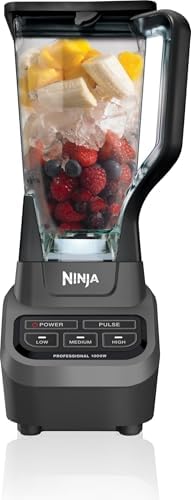
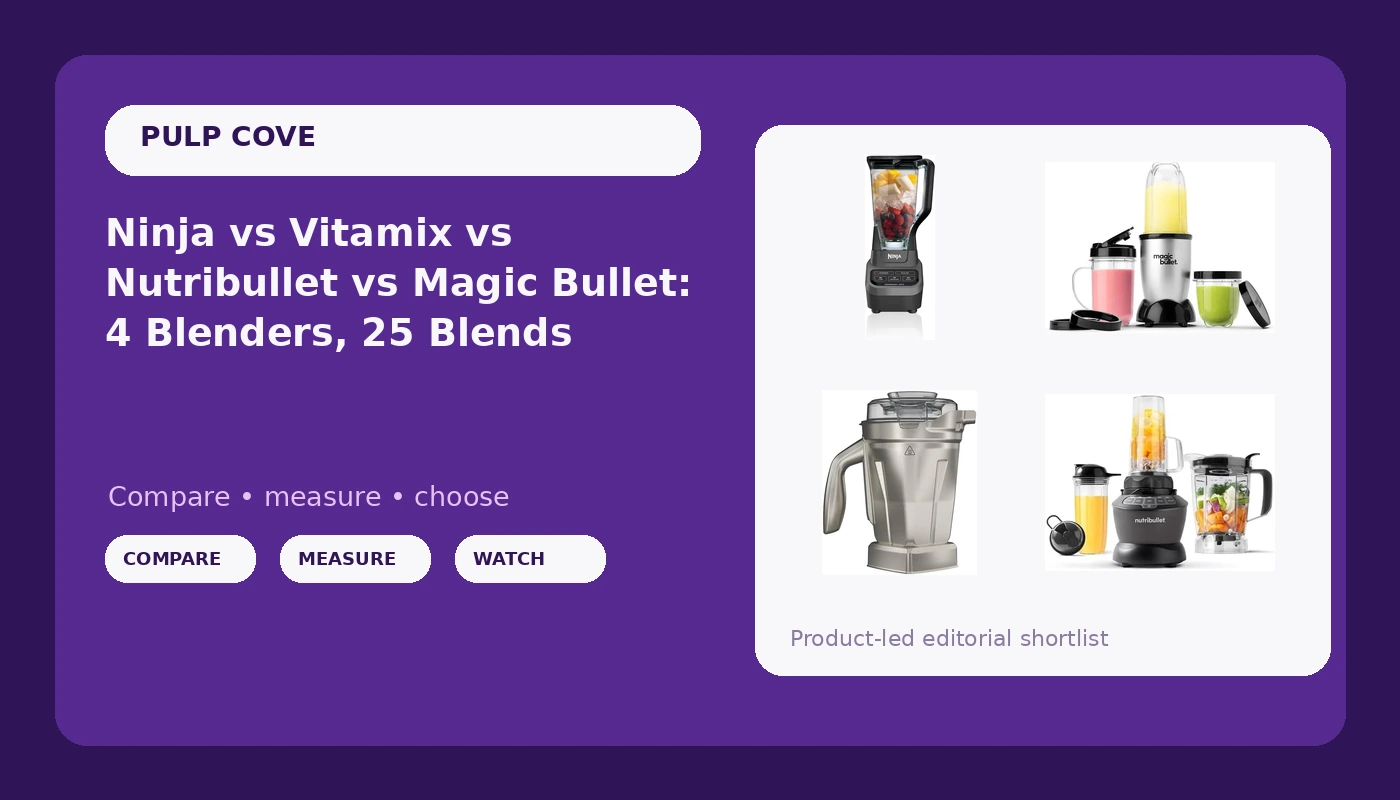
Ninja Professional Blender BL610, 1000W, Total Crushing, 72 oz Pitcher
1000 watts, Total Crushing blades, a 72 oz pitcher, and a price that undercuts the premium route by a mile. It crushed ice beautifully out of the box.
Around blend 25 the blades dulled and my smoothies went grainy. Overload the pitcher and the lid lets you know about it.
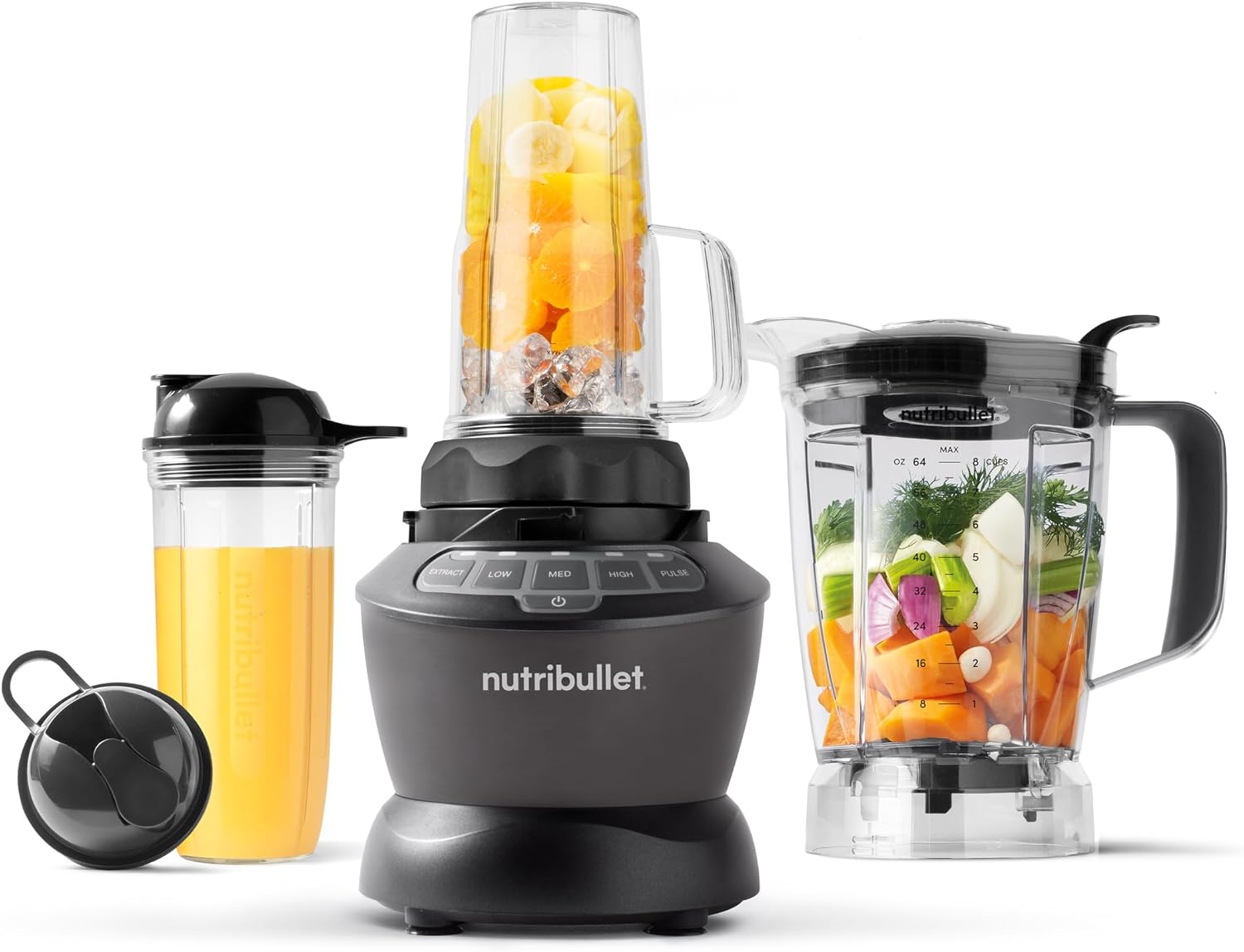
Nutribullet Full-Size Blender Combo NBF50500, 1200W, 64 oz Pitcher, 32 oz Cup, Extractor Blade
1200 watts, a 64 oz pitcher and a 32 oz cup on one base, plus a 3-speed dial with pulse. On paper this is the most flexible footprint in the group.
More parts to store and wash, and two vessels do not fix a dull blade. I would log 25 blends before trusting an extractor blade with frozen blocks.
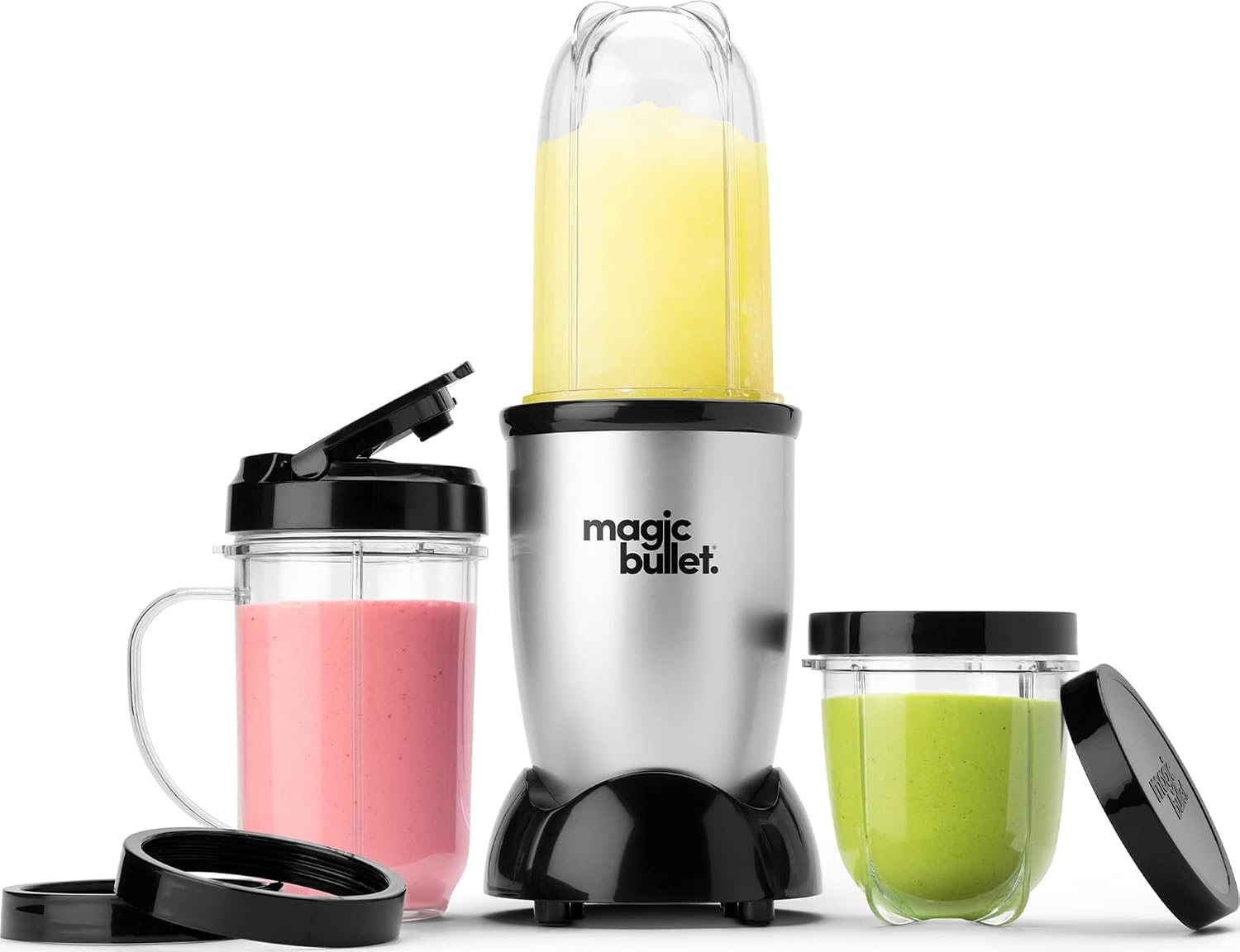
Magic Bullet Personal Blender MBR-1101, 250W, 22 oz, Silver
250 watts, a 22 oz cup, and a footprint small enough to live in a cabinet. For one shake a day it is simple and quick to clean.
Loud enough that I cover my ears, and the connection points between the base and the cup wear out over time.
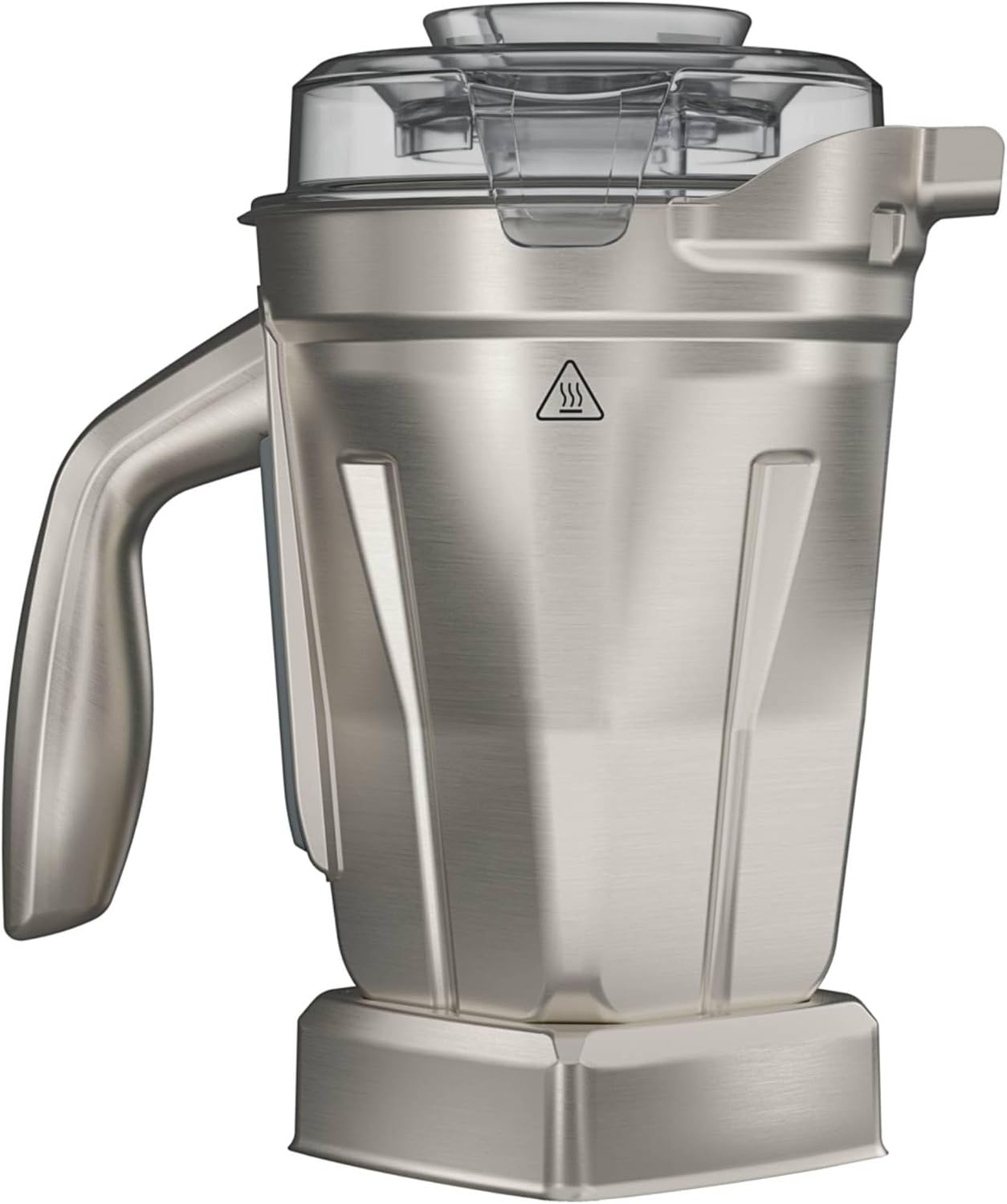
Vitamix 48 oz. Stainless Steel Blender Container with SELF-DETECT, BPA-Free
Stainless steel, BPA-free, 48 oz, with self-detecting identification. If you already own a Vitamix base, this is the vessel that makes smaller batches practical.
It is not a blender. Without a compatible Vitamix base it does nothing at all, and the premium route costs roughly five times a Ninja setup.
Prices and availability were captured from Amazon Creators API and may change.
How I test a blender now
Four rules decide whether a machine earns countertop real estate in my kitchen.
First, a frozen fruit and ice test on blend one. If I find chunks, it fails, no matter what the box claims. Second, a 25-blend log, because blades dull and that is where texture gives out. Third, a decibel reading at full power, taken with a meter at arm's length, because "apartment friendly" is a marketing phrase until somebody measures it. Fourth, a full-batch run with the pitcher loaded to the line, since a lid that pops under load is a lid I do not want in my kitchen at 6 a.m.
I also take apart every part that claims to be dishwasher safe, base included, and I check the connection points for wobble after a few weeks of daily use.
Everything below comes from that routine plus years of running a smoothie stand, not from a spec sheet. Where I have not logged something myself, I say so instead of guessing.
Ninja Professional Blender BL610: the full-pitcher value pick
The BL610 is the machine I recommend first to anyone who wants a big pitcher without paying premium money. You get 1000 watts, Ninja's Total Crushing blade stack, and a 72 oz pitcher. On day one it does exactly what the name promises: frozen mango, ice cubes, and a splash of liquid come out smooth in under a minute.
I lived the catch. After roughly 25 blends, my smoothies started coming out chewy, the texture I call grainies. Nothing broke, nothing smelled like smoke, the blades just stopped being sharp enough to shear through frozen fruit the way they did in week one. That is not a Ninja-specific flaw. It is what happens to every blade-driven machine, and the Ninja's price is part of why it arrives sooner rather than later.
Buy it if you blend a few times a week and want volume, and if you understand that a $99-class machine is a few good years, not a decade. Skip it if you blend twice a day for years, which is exactly the routine that pushed me toward the premium route.
Two habits make the BL610 last longer. Tamp down stubborn ingredients instead of overloading the pitcher, and never fill past the line with frozen blocks plus liquid. An overloaded 72 oz pitcher is how lids pop and how smoothie ends up on the ceiling.
Nutribullet Full-Size Blender Combo NBF50500: the two-vessel compromise
The Nutribullet Full-Size Blender Combo is the most interesting machine in this group because it refuses to pick a lane. You get a 1200 watt base, a 64 oz pitcher for batches, a 32 oz cup for single servings, an extractor blade, and a 3-speed dial with pulse. Same motor, two jobs.
If your household is one person who makes a shake on weekdays and a full pitcher on Sundays, this is the shape of machine that ends the argument. It also has the highest wattage rating here, which matters most on frozen fruit and ice, the exact test I run first.
The trade-offs are honest ones. Two vessels mean twice the cabinet space and twice the parts to wash, and the "easy cleaning" language in the listing describes the design intent, not my verification. A combo base also does double duty, so the same blade assembly gets used harder than a dedicated pitcher machine would.
And the blade question does not go away. A 1200 watt motor does not stop an edge from dulling, it just means the machine has more power to compensate with. Before I trusted this one with daily frozen blocks, I would log 25 blends and taste for grainies, the same as I do with everything else.
Magic Bullet MBR-1101: the budget personal blender done honestly
The Magic Bullet is the classic personal blender, and it earns that reputation. 250 watts, a 22 oz cup, and a footprint small enough to leave on the counter without losing your workspace. Blend, twist off the blade, drink from the cup. Cleanup takes a minute, and for a single protein shake or a one-person smoothie that is the whole job.
Two things I will not pretend about. It is loud. My Magic Bullet season is when a neighbor knocked on my door and asked what the jet engine was, and apartment walls did not stop it. And the connection points between the base and the cup wear out over time, which shows up as a cup that wobbles instead of locking down.
With 250 watts, frozen blocks need respect. Add liquid first, work in small batches, and do not jam a solid brick of frozen banana on top of the blade and hope. Do that and it is a genuinely useful machine for one drink a day, especially for someone in a small kitchen who does not want to store a pitcher.
What it is not: a batch machine. If you are blending for two people or prepping for the week, the cup size becomes the bottleneck fast.
Vitamix 48 oz Stainless Steel Container: the premium route, with a catch
Read the name carefully, because this row is different from the other three. This is a 48 oz stainless steel container with SELF-DETECT and BPA-free construction. It is a vessel. It is not a blender, and if you do not already own a compatible Vitamix base, it does nothing for you.
If you do own the base, the case for it is straightforward. Stainless resists the staining and lingering odors that plastic pitchers pick up over years of berries and greens, 48 oz is a sane size for one or two people instead of a pitcher built for a family, and the SELF-DETECT feature means the base identifies the container rather than you setting it manually.
The wider premium argument is the one I keep making. A Vitamix does not depend on a razor edge that dulls by blend 25. It blends with power and speed instead, which is why I eventually bought one after my Ninja went grainy, and why it makes flour now. There are real trade-offs: it aerates more than you expect, so shakes come out foamier, and a long run warms the drink. It also costs roughly five times a full Ninja setup, which is the entire decision in one sentence.
The 25-blend mark, or when smoothies turn into grainies
Every blade dulls. Every single one. The only question that matters is whether it happens after 25 blends or after five years, and that number is what you are actually paying for.
This is why I refuse to rank blenders by wattage alone. A 1200 watt rating describes the motor, not the edge, and a dull blade on a strong motor gives you grainies faster and louder. It is also why I push back on "smooth in seconds" claims. Those claims are true on blend one. Blend 26 is where the marketing stops and the texture starts.
My Ninja BL610 went grainy around 25 blends under twice-daily frozen fruit and ice, which is an aggressive schedule. A lighter routine would stretch that number considerably. The Vitamix approach skips the countdown almost entirely, and that is the honest reason it costs what it costs.
If you blend daily, do the math on value this way: price divided by the number of velvety smoothies you get before the texture turns. A cheap machine that dies in a month is the most expensive blender in the store. A mid-range machine that gives you two or three good years may be the best math in the category. A premium machine that outlives your apartment wins on the long version of that equation.
Noise: the feature you actually pay for
Nobody markets silence, because silence is expensive. It is also the specification that most affects whether you actually use the machine you bought.
Bullet-style personal blenders are the loudest things in my kitchen, and I say that as someone who blends at 6 a.m. and apologizes to the neighbors about it. Full-size pitchers with heavier bases tend to be a different kind of loud: lower, more rumble than shriek. Premium machines do not get a free pass either, and I have measured machines at full power with frozen fruit rather than water, because water is a flattering test.
The practical rule: any "apartment friendly" claim needs a decibel reading at full power before you believe it, and if you cannot find one, buy somewhere with a return window and test it with a real frozen smoothie in the first week. Noise is not a spec you learn to live with. It is the reason a blender ends up in a cabinet behind the rice.
Capacity, portion control, and countertop real estate
Pitcher size is where most people buy the wrong machine. A 72 oz pitcher is a curse for a single person, and I learned that from a customer on a liquid diet who made a full pitcher her first week and froze the leftovers because she could not finish one batch.
Match the vessel to your actual routine. One shake a day points at a 22 oz cup or a 32 oz single-serve cup. Two people who blend every morning point at a 48 to 64 oz pitcher. Batch prep for the week points at 64 to 72 oz, plus space in your freezer.
Then count the inches. Countertop real estate is real estate, and a 2-in-1 earns its rent by covering two jobs in one footprint. It still needs cabinet space for the second vessel, which is the part people forget when they are standing in the store.
What I would buy, and what I would skip
For a family that wants big batches at a fair price, the Ninja Professional BL610 is the pick, with clear eyes about the grainies clock. Blend a few times a week and it will treat you well for years.
For one person who wants both a weekday shake and a Sunday pitcher, the Nutribullet Full-Size Blender Combo is the most flexible answer here, provided you have the storage for a second vessel.
For a single daily shake in a small kitchen, the Magic Bullet MBR-1101 is the honest, simple choice. Keep the frozen blocks reasonable and it does the job.
For anyone who already owns a Vitamix base and wants smaller batches, less staining, and a pitcher sized for one or two, the Vitamix 48 oz stainless container is the upgrade that makes sense. For everyone else, it is the wrong first purchase, and no amount of stainless steel changes that.
A note on prices and links
I do not print prices in this comparison because they move constantly, and a number frozen into an article is a number that will be wrong by the time you read it. Each row in the table links to the current listing for that product, so check current Amazon price there before you decide. What does not move is the math: wattage tells you about the motor, pitcher size tells you about your routine, and blade life tells you what the machine will actually cost you per good smoothie. That is the number I build my kitchen around.