I ran a six-stool smoothie stand before any of this turned into a website, and every machine in this blender and juicer comparison has spent real mornings on my counter. No sponsored unboxing, no first-blend impression. Full pitchers, frozen mango straight from the freezer, ice cubes from the tray, and a decibel meter sitting on the cutting board next to the fruit. I have made something like 40 smoothies before 9 a.m. on a Saturday, and I have watched what happens to a blade after the honeymoon ends. That is the part most roundups skip.
Related: Cold Press vs Centrifugal Juicers: What Actually Comes Out
For most kitchens, the Ninja BN751 is the pick, because 1400 peak watts and Total Crushing blades turn a full pitcher of frozen fruit into a velvety pour on blend one, and the Auto-IQ programs mean you can walk away. But the short answer hides the interesting part. A 72 oz pitcher is a curse for one person, a cold press juicer only earns its footprint if you actually juice greens daily, and an immersion blender can replace a countertop machine entirely if you never crush ice. Here is what each one does well, and where each one loses.
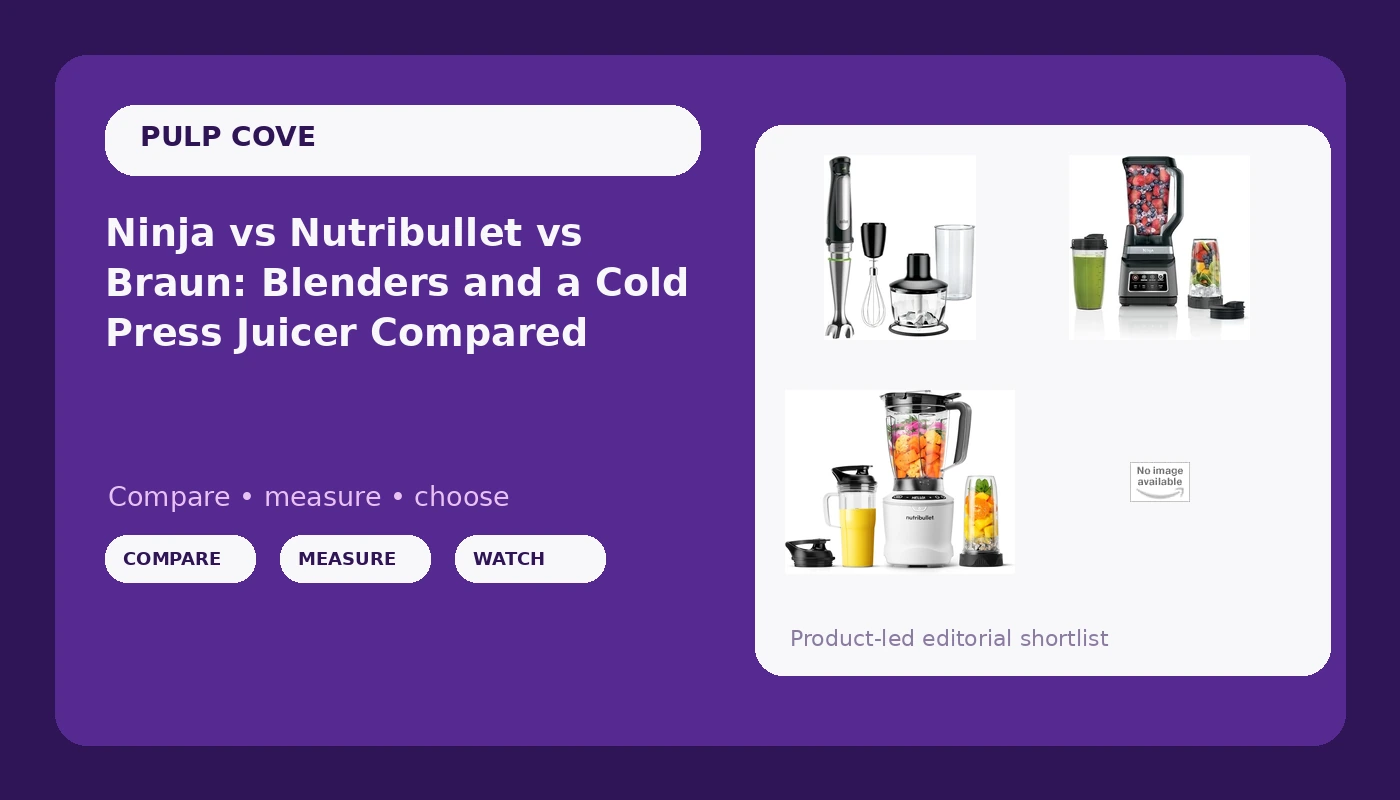
Ninja BN751 Professional Plus DUO Blender
1400 peak watts and a 72 oz Total Crushing pitcher that pulverizes ice without chunks on blend one, plus two to-go cups and Auto-IQ programs
Blades dull; past roughly blend 25 my batches started drifting toward grainies, and an overloaded pitcher will pop its lid
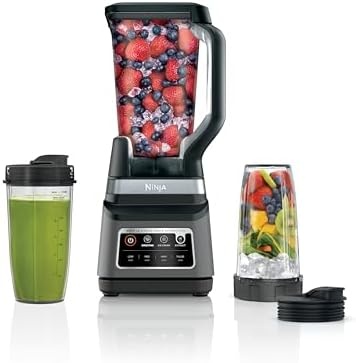
nutribullet SmartSense Blender Combo
1400W with a 64 oz pitcher plus 32 oz and 24 oz cups, and five speeds of manual control for nut milk and soup
The cup connection points are the wear item, and it runs louder at full power than the wattage suggests
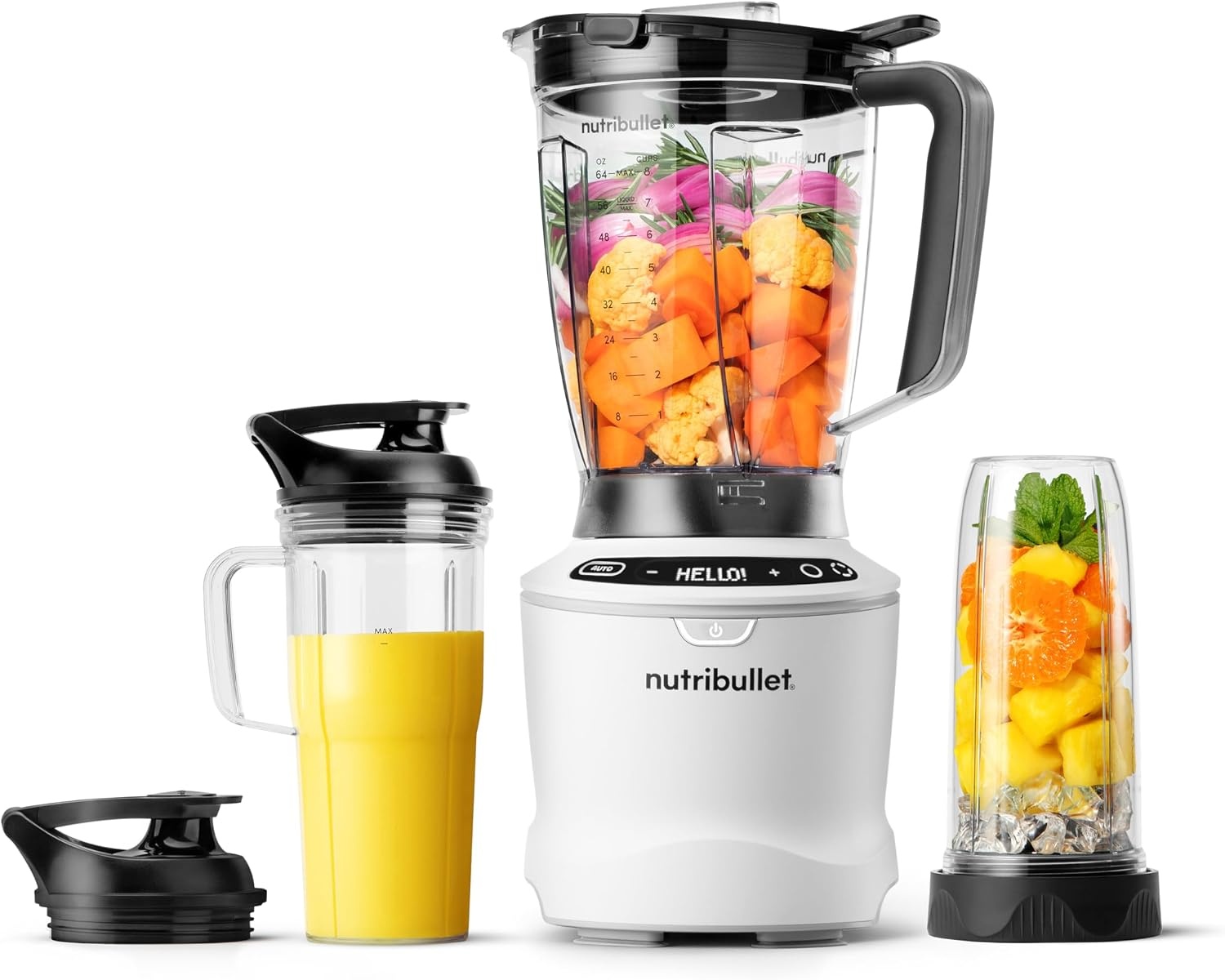
Braun MultiQuick 7 3-in-1 Immersion Blender & Food Processor
Three tools on one shaft: blend soup in the pot, no pitcher to wash, plus a food processor bowl for prep
It is not an ice crusher, and a full pitcher of frozen mango is simply not its job
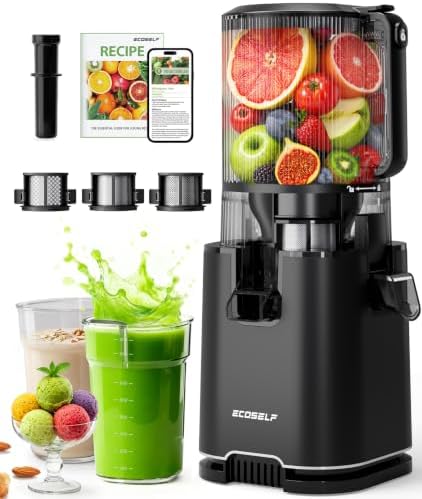
Cold Press Juicer Machines
Slow and quiet, and it squeezes noticeably more out of greens than a centrifugal machine ever will
It does exactly one job, it is slow by design, and it takes countertop real estate away from your blender
Prices and availability were captured from Amazon Creators API and may change.
How I test before anything gets recommended
Every machine here gets the same treatment. First, the frozen fruit and ice test: a full load of frozen mango, strawberries, and six ice cubes, blended on the program or speed the manual suggests. If I find chunks, it fails and it does not matter what the box promised.
Second, the noise reading. I run a decibel meter at full power from about 40 cm away, because "apartment friendly" is a marketing phrase and a number is a fact. Third, the full-batch run. If a lid pops off when I fill the pitcher to the line, that machine is out, and I have cleaned smoothie off a ceiling before, so I mean it. Fourth, the dishwasher check on every single part, including whether the base of anything can actually be taken apart without a fight.
And then the long one: the 25-blend log. This is where the truth shows up. A blade that feels razor sharp on day one can be chewing rather than cutting by blend 25, and that is when a smoothie turns into what I call grainies. Chewy. Not smooth enough. Sad. If a machine still pours velvety at blend 25, it has earned its price.
Ninja BN751 Professional Plus DUO Blender
The Ninja BN751 is the one I would hand to most people, and I say that as someone who has been burned by Ninja blades before. The 1400 peak watts and the 72 oz Total Crushing pitcher do exactly what the name promises on a full load of frozen fruit and ice. No chunks. No tamping, no stopping to shake the pitcher, no second pass. The three Auto-IQ programs for smoothies, frozen drinks, and nutrient extractions are genuinely useful when you are making four drinks at once and cannot stand there watching.
The two 24 oz to-go cups matter more than they sound. At the stand, a liquid-diet customer needed a protein shake in 30 seconds flat, and a personal cup on a big motor is the fastest route from frozen banana to drinkable. That is a real use case, not a gimmick.
Here is where it loses. Blades dull. Every blade dulls. On this class of machine, my log says the change starts showing up around blend 25, and the smoothies go from velvety to grainies in a way you notice before you can explain it. The other catch is the pitcher itself. A 72 oz capacity is wonderful for a family and ridiculous for a single person, and if you fill it past the line because you are in a hurry, that lid will pop and you will be wiping the wall.
nutribullet SmartSense Blender Combo
The nutribullet SmartSense Combo is the machine I reach for when I want control instead of a program. It is 1400W with a 64 oz pitcher, a 32 oz cup, and a 24 oz cup, and it gives you five speeds rather than a single button. If you make nut milk or soup, that dial is the difference between a texture you chose and a texture the machine chose for you.
The cup setup is the reason this one stays in the rotation. Blending directly into the cup you will drink from removes an entire cleaning step, and for a rushed morning that is the whole game. The pitcher is also sized more sanely than the Ninja's for one or two people, which matters when countertop real estate is measured in inches.
What it loses: the connection points between the base and the cups are the wear item on any personal blender, and I check them the way I check a car tire. They loosen with use, and a wobbly cup on a spinning base is not a fun sound. It also runs louder at full power than you would guess from the wattage number, so if you share a wall, read the noise point twice. And if you are chasing the absolute smoothest possible texture, the Ninja's blade geometry gets there a touch more aggressively on ice.
Braun MultiQuick 7 3-in-1 Immersion Blender & Food Processor
The Braun MultiQuick 7 is not competing with the others, and once you accept that, it becomes the most useful object in the drawer. It is an immersion blender, a whisk, and a food processor in one shaft and one bowl. Soup gets blended in the pot, which means no pitcher to wash, no pouring hot liquid into plastic, and no second appliance on the counter. For a small apartment kitchen, that is worth more than any spec sheet suggests.
The food processor bowl handles the prep work that a big blender is bad at: chopping onion, making a rough paste, pulling together a sauce while the pan is already hot. The whisk attachment handles cream and egg whites without dragging out a stand mixer. Three tools, one footprint, and cleanup that takes under a minute.
The loss is straightforward. This is not an ice crusher. It will not turn a full pitcher of frozen mango and six ice cubes into a velvety smoothie, and it was never designed to. If your routine is a daily frozen smoothie, this is your second tool, not your first. If your routine is soup, sauces, and a smoothie a few times a week, it may be your only tool, and you just freed up a foot of counter.
Cold Press Juicer Machines
Cold press juicing is the slow lane, and the slow lane wins on yield. A masticating machine crushes and presses rather than shredding at high speed, so leafy greens give up noticeably more liquid than they do in a centrifugal juicer. It is also far quieter, which in an apartment at 6 a.m. is not a small thing. If you juice greens every day, the difference in what comes out of a bunch of kale pays for the patience.
The costs are real. It is slow by design, and a big glass of juice is a project rather than a two-minute task. It does one job, so it occupies countertop real estate that your blender might want. And cleanup takes longer, because there are more parts and pulp has to be dealt with, not just rinsed away.
My honest framing: a centrifugal juicer is the right first juicer for oranges and watermelon because it is fast and cheap. Cold press is the right answer once juicing is a habit rather than a whim, because that is when the extra yield and the quiet start to matter more than the speed.
The trade-offs, side by side
Blade durability versus blade design. The Ninja and the nutribullet both rely on sharp, aggressive blades, and sharp things dull. That is not a defect, it is physics, and it is why the price is what it is. A premium machine that blends with power and speed rather than sharpness has nothing to dull, which is the actual thing you are paying for at five times the price. Set your expectations at the 25-blend mark and you will never be disappointed by a mid-range machine.
Pitcher size versus actual portions. A 72 oz pitcher is wonderful for a family of five and a burden for one person. A 64 oz pitcher is barely better. If you live alone, the cups are the feature you will use, and the pitcher will sit there collecting dust until Sunday batch prep. Buy for your Tuesday, not your Thanksgiving.
Noise versus the neighbors. Wattage and volume are not the same number. A 1400W machine can be louder or quieter than another 1400W machine depending on how it is built, which is exactly why I measure instead of guess. If you blend before 7 a.m. in an apartment, this is the spec that decides whether you keep your relationship with the people next door.
Cleaning versus everything else. The Braun wins this category outright because there is no pitcher at all. The nutribullet is second because you can drink from the cup you blended in. The Ninja's pitcher and lid are more parts, and the cold press juicer has the most parts of all. If you will not clean it, you will not use it, and an unused machine has infinite cost per smoothie.
Which one fits your kitchen
Buy the Ninja BN751 if you make frozen smoothies or frozen drinks for more than one person, you want to press a button and walk away, and you accept that the blades will dull after a few dozen blends. It is the best value per watt here.
Buy the nutribullet SmartSense Combo if you want manual speed control for nut milk and soup, you blend for one or two, and you want to drink straight from the cup you blended in.
Buy the Braun MultiQuick 7 if your counter is small, your routine leans toward soup and sauces, and you want three tools in one footprint. Pair it with a cheap personal blender for frozen fruit and you have covered almost everything.
Buy the cold press juicer if juicing greens is already a daily habit, not a January resolution. If it is a resolution, start with something cheaper and faster.
What I'm testing next
The 25-blend log is still running on two of these machines, and I want the number past 50 before I make any claim about how long the blades hold. I am also logging aeration on protein shakes, because a shake that comes out half air is a shake you did not drink. When those numbers are in, this page gets updated with the results, good or bad.